 by Matt Rej

Key Takeaways:
- Mastercard’s Undefined Authorization Fee is increasing to 0.30% ($0.05 minimum).
- MC MOTO Fee will be assessed on all authorizations (including declined).
- Visa’s Digital Commerce Service Fee is increasing and expanding to four additional services.
- Visa Level 2 CEDP interchange incentives are sunsetting April 17, 2026.
- Amex is introducing three new interchange categories.
The card networks are always making changes at the interchange level, which directly impact your merchant fees. From rate increases to new interchange categories, new technology, retired programs, and more, there’s a lot to keep track of.
Here’s a summary of the latest changes from Visa, Mastercard, Discover, and American Express:
Visa
The biggest card network changes from Visa are still tied to its CEDP program that launched in phases last year. This is part of Visa’s broader strategy to ensure merchants are submitting accurate enhanced data on commercial transactions—rewarding those who do with lower rates and charging more at the interchange level if data is missing.
Effective January 24, 2026, Visa is increasing rates for Product 3 business credits submitted with Level 2 data.
And then on April 16, 2026, Visa’s Level 2 data program is officially sunsetting altogether.
So we’re in the final months where verified non-fuel merchants can still submit L2 data to get reduced CEDP rates. After that mid-April date, you’ll need to submit Level 3 data to qualify for the reduction.
Note: There’s still a 0.05% assessment on all Visa CEDP transaction volume.
Visa Fee Changes (Effective April 2026)
Visa Integrity Risk Fee – Cryptocurrency Transactions (April 1): New pricing for crypto transactions that apply to MCCs 6012 and 6051.
Visa Digital Commerce Service Fee (April 1): Increasing to 0.015% (min $0.01) for domestic transactions and 0.035% (min $0.01) for cross-border transactions. Will also be applied to four additional services: TAVV, VAU/RT-VAU, VDCU, and VCES.
Visa Cross-Border Digital Commerce Service Fee (April 1): New fee of 0.0225% (min $0.0125) on certain cross-border transactions, which may be assessed in addition to existing Digital Commerce Service fees depending on how the transaction was processed.
Visa Card Present Token Fee (April 1): New fees will be assessed on card present transactions, 0.01% for domestic and 0.05% international.
Visa System Integrity Fee – Interregional Authorization Attempts (April 25): Increasing this fee to 0.25% for excessive cross-border retries (fee applies to all retries). No retries are allowed for Category 1. For Categories 2-4, the fee will be assessed on the 21st retry (up to 20 retries allowed within 30 days).
Visa Program & Authentication Updates (Effective April 17-18, 2026)
CVV2 Value Updates (April 17): CVV2 values 2 and 9 are being retired, and will be converted to value 0 (CVV2 not provided) if submitted. Descriptors and usage of other CVV2 values are also being updated.
Visa CEDP Updates (April 17): Visa is sunsetting legacy Level 2 interchange incentives for Commercial and Small Business transactions as part of its transition to the Commercial Enhanced Data Program.
Digital Commerce Authentication Program (April 18): New 0.05% Enhanced Data Fee Program for qualifying DCAP transactions.
Compelling Evidence 3.0 Expansion (April 18): Merchants will have access to CE3.0 for fraud records when disputes were not raised. Previously, this was only available for active CNP fraud disputes.
Mastercard
Mastercard increased its Undefined Authorization Fee to start the year. This is important to note because Undefined Authorization Fees are the highest TPE penalties, and this is the second rate hike we’ve seen in just 7 months.
There’s another increase on MC Undefined Auth Fees planned for January 2027 as well to further discourage merchants from submitting authorization requests that aren’t properly categorized.
This was all previously announced and aligned with Mastercard’s Transaction Processing Excellence (TPE) program, designed to encourage proper authorization standards.
Mastercard is changing the way it calculates Mail/Telephone Order (MOTO) Fees.
The fee itself is staying the same, and will continue to be assessed at 0.015%. But rather than charging this only to cleared transactions, Mastercard is now charging its US MOTO Fee on all authorizations (including declined auths).
For Mail/Telephone transactions over $500, Mastercard is introducing a $75 fee cap on declined transactions.
Mastercard Fee Changes (Effective January 1, 2026)
These two changes officially went into effect by Mastercard in January 2026, though some processors aren’t passing through these new fees until April 2026.
Mastercard Fallback Avoidance Fee: New 0.10% fee assessed on all authorized fallback transactions.
Mastercard Force Post Transaction Fee: New $0.09 per transaction fee when clearing is submitted without prior authorization.
Undefined Authorization Fee: Increasing to 0.30% (up from 0.25%) with a $0.05 minimum (up from $0.04).
Digital Enablement Fee: Billed at 0.025% with a $0.025 minimum and $0.50 max.
Additional Program Changes from Mastercard
MOTO (Mail/Telephone) Updates (Effective January 1, 2026): Fees will be applied to all US MOTO transactions (including declined authorizations). Rate is staying the same (0.015%).
Fraudulent Processing Chargeback (April 17, 2026): Mastercard is reinstating its Fraudulent Processing of Transactions chargeback as a compliance case. This targets schemes where cardholders are mislead into approving additional in-person transactions under different merchant names or locations.
Mastercard FPAN Masking Requirement (April 17, 2026): Full card numbers (FPAN) are no longer allowed in dispute documentation Merchants must mask all but the last four digits when submitting documents or they’ll be subject to violations and additional fees.
Specialty Merchant Registration Program Fees (Effective June 3, 2026): New transaction and volume fees for merchants enrolled in this program, billed at 0.10% + $0.02. In addition to the transaction-based pricing, Mastercard is also introducing a $1,000 annual fee for merchants enrolled in the Specialty Merchant Registration program.
M/Chip Deployment Performance Program (Effective August 1, 2026): New per-terminal fee for devices causing chip technology failures.
American Express
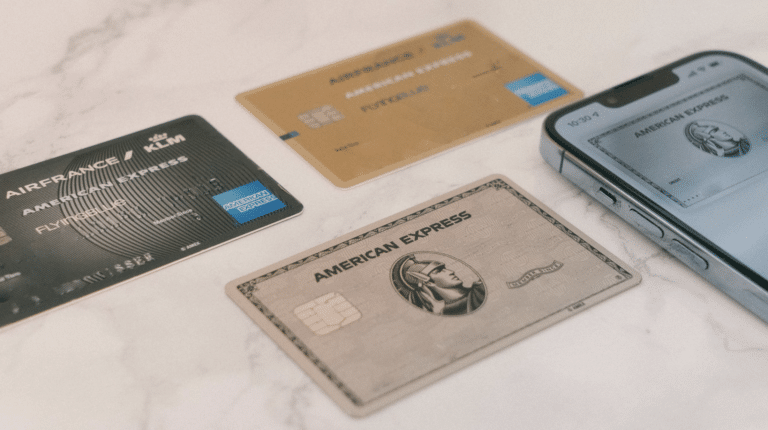
To start the year, Amex focused its efforts on annual fees and benefits for some of its flagship consumer products for 2026.
For example, the annual fee on the Amex Platinum card increased to $895 per year (up from $695) on January 2, 2026. There are also some changes to the card’s hotel credit benefit, dining credits, digital entertainment credit, and other benefits.
I’ll be curious to see if Amex adjusts its interchange rates accordingly in the near future to account for these benefit changes, as the $200 annual fee increase may not be enough to cover the cardholder perks.
New Amex Program Continuation Fee (Effective April 2026)
This will be broken into three tiers based on transaction volume:
- 0.03% for $3M – $5M volume
- 0.10% for $15M – $100M volume
- 0.20% for $100M+ volume
This applies specifically to merchants in the Amex OptBlue program and is tied to annual volume thresholds.
Additionally, Amex is tightening OptBlue requirements. They are requiring additional merchant profile data to register, and incomplete or inaccurate info could result in merchants being blocked from processing.
New Amex Interchange Programs (Effective April 17, 2026)
- T&E Micro Ticket – 2.00% + $0.02
- T&E Small Ticket – 1.60% + $0.04
- Other Micro Ticket – 2.00% + $0.02
- Other Small Ticket – 1.60% + $0.04
New Amex OptBlue Eligibility (Effective April 17, 2026)
American Express increased the OptBlue threshold to $3 million (up from $1 million).
If you’re already on OptBlue, you can continue accepting through your processor knowing that you have a higher limit before a direct agreement is required. But if you were forced into a direct agreement under the old threshold and you’re under $3 million, you’re now eligible for OptBlue.
Discover
Since Capital One officially completed its merger with Discover last year, debit interchange fees are set to increase on more cards.
Discover is a closed-loop network, which means it’s exempt from the Durbin Amendment that caps regulated debit card fees at 0.05% + $0.22. And now that the merger is complete, Capital One can start using Discover’s network to bypass debit interchange caps.
So Capital One debit cards that were mostly routed through Mastercard’s network will be routed to Discover’s network as early as January 2026.
Debit interchange rates going through Discover’s network could be as high as 1.10% + $0.16 per transaction for card-present transactions and 1.20% + $0.05 for CNP transactions.
For merchants processing Capital One-branded debit cards, this means that your interchange fees can increase over 20x per transaction this year, which is unprecedentedly high.
Discover Offline Plaintext PIN Retirement
- Effective January 1, 2026, all offline plaintext PINs must be removed from customer-activated terminals.
- Must be removed from all terminals by January 1, 2028.
New Discover Travel Interchange Rates
Effective April 17, 2026, Discover is updating the following interchange categories:
- Hotel/Car Rentals Core – 1.75% + $0.10
- PSL Hotel/Car Rentals Premium – 2.25% + $0.10
- Hotel/Car Rentals Premium Plus – 2.55% + $0.10
- PSL Passenger Transportation Premium – 2.25% + $0.10
- Passenger Transportation Premium Plus – 2.55% + $0.10
See all of Discover’s new interchange rates here.
Other Card Network Updates to Keep an Eye on in 2026
This year will be particularly interesting because of what’s happening around the Visa/Mastercard interchange settlement.
In June 2026, a federal judge conditionally approved the $38 billion settlement offer.
If it gets final approval, the networks have agreed to lower interchange rates by 0.10% over the next five years, while capping standard cards at 1.25%. So in theory, this can be applied as early as this year.
But I still have my doubts that the latest iteration will be approved because I simply don’t think it does enough to help merchants. And I’m hoping the courts will agree.
Speaking of settlements, the deadline for merchants to file a claim in the $1.225 billion class action lawsuit against Discover is May 18, 2026 (which has since expired).
This is for businesses that accepted Discover cards between 2007 and 2023. The lawsuit alleges that Discover misclassified consumer cards as commercial cards, pushing them into higher interchange tiers.
We’ll continue to update this resource throughout 2026 as more information becomes available. So continue to check back for updates, especially around April and October. You can also subscribe to our newsletter to get these updates delivered straight to your inbox every month.