 by Matt Rej
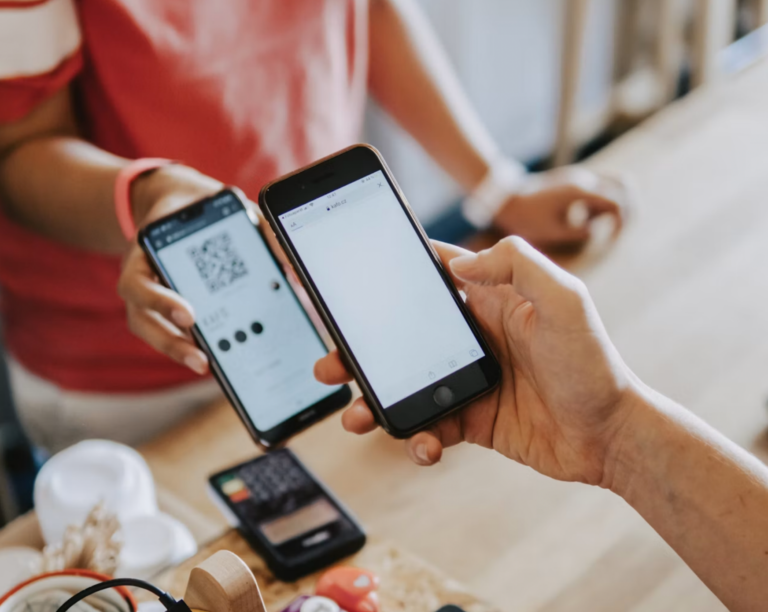

QR code payment acceptance may seem convenient or tech-forward. But that’s not the real reason why your processor is trying to push this feature on your business.
The truth is that processors can typically earn more money on QR code payments compared to a traditional card transaction, and that difference comes from your profit margin.
While there may be a place for this feature in certain scenarios, QR code payments are undoubtedly more expensive for many merchants.
Those hidden costs aren’t always obvious, and that’s exactly what I’ll break down below.
Why QR Code Payments Are More Expensive
Despite the QR code generation itself being marketed as a “free” payment acceptance method, the primary reason why these payments cost more is actually pretty straightforward:
- QR code payments are considered card-not-present (CNP) transactions
- Even if the customer is physically present at your location during the sale
- CNP transactions are more expensive than their card-present counterparts
If you’re using a flat-rate processor, your card-present rate might be 2.9% + $0.10 per transaction while your CNP rate could be as high as 3.5% + $0.30 per transaction.
Even merchants on an interchange-plus pricing structure can pay more for QR code payments, as the underlying interchange rate is typically higher, there are additional network assessments for CNP sales, and your processor may also charge extra fees for CNP volume.
And all of this is just the first phase of the added costs. You still need to account for:
- Higher risk of fraud
- Chargebacks you likely won’t win
- “Quishing” (fake QR codes being placed over your legitimate ones)
All in, something simple like a QR code payment introduces a range of new costs that few businesses actually think about. Because the majority of information out there is being pushed by payment providers and QR code generators who have an incentive to market the “convenience” perks.
When QR Code Payments Cost You More
QR code payments are more expensive to process whenever they replace what would otherwise have been paid through a physical card reader or payment terminal.
If the customer is right in front of you and pays through a link generated on their phone instead of tapping, dipping, or swiping a card, a card-present transaction just turned into a card-not-present sale that carries a higher rate.
Examples include:
- Customers scanning a QR code at their table instead of handing their card to a server
- Directing customers to pay through QR codes printed on receipts
- QR codes displayed next to the card terminal
- Telling patients to scan the QR code on their after-visit summary
- Customers paying through a QR code instead of a self-service kiosk
- Staff directing customers to checkout with a QR code to keep the line moving
These types of transactions cost more even if the card reader is unmanned.
For example, let’s say you own a parking garage. If someone pays for their space using your payment machines, it’s a card-present transaction. But if that same customer scans a QR code at a sign in front of their space, it becomes a more expensive CNP sale.
Same concept can be applied to a self-ordering kiosk at a quick-service restaurant.
How Much More Does it Actually Cost?
This answer depends on the processor and the structure of your merchant agreement. But here are some examples that illustrate the difference:
SpotOn
SpotOn offers a variety of QR code payment options geared toward restaurants, including the ability to assign QR codes to table numbers. These features come with an added software cost component, starting around $55 per month.
In terms of the actual transactions:
- 2.45% + $0.15 for card-present transactions
- 3.45% + $0.05 for QR code and CNP
So you’re looking at a full percentage point (100 bps) more to accept a QR code payment compared to a traditional in-person card sale.
Even a small location doing a modest $200k in volume per month. That’s an extra $2,000 monthly or $24,000 annually in merchant fees just for enabling this feature.
Toast
Similarly, Toast has multiple QR code payment options available. Though there’s a slight variation in pricing.
For Toast Pay, the QR code printed on guest checks is billed at your CNP rate. Whereas the Mobile Order & Pay QR code at the table uses your manually keyed rate. And both are going to be more expensive than simply using your Toast hardware to physically accept the card.
Toast’s rates vary by account, but we typically see them starting at:
- 2.49% + $0.15 for in-person tap, dip, and swipes
- 3.50% + $0.15 for CNP, manually entered, and QR codes
Again, you’re paying an extra 1% to process these transactions because they’re running at the card-not-present rate.
Shift4
Merchants using a more traditional acquirer like Shift4 likely can’t relate to the flat-rate examples above. And if you’re on an interchange-plus contract with them, your base discount rate will look the same for every transaction.
However, Shift4 charges a separate card-not-present volume fee, which we’ve seen around 0.50% + $0.13 per transaction.
This is easy to overlook if you’re just focusing on your per-transaction markup.
And for a restaurant doing real volume, those QR code payments could easily exceed $500k per month in volume. At a 50bps markup, you’re looking at around $2,500/month and $30,000/year in additional processing fees.
When It Makes Sense to Accept QR Code Payments
QR codes arne’t an inherently bad payment option in all scenarios. They just belong in situations when the transaction was already going to be card-not-present.
In those cases, you’re not trading a cheaper card-present rate for a more expensive one. You’re going to pay the CNP rate either way, and the QR code simply provides a payment option that’s easier for collection:
Good examples include:
- Patient statements, invoices, and past-due balances sent by mail or email
- Phone orders that your staff would otherwise key in manually
- Takeout and curbside orders paid for before the customer arrives
- Deposits for reservations, private events, or appointments
- Donation drives where you never have a card reader set up
The key commonality here is keeping QR codes tied to remote payments.
Once those cardholders start showing up in-person (at the table, counter, or front desk), you shouldn’t be directing them to a QR code.
Final Thoughts
QR code payments have become more prevalent in recent years as processors push for more value-added service revenue.
They started gaining traction back in the pandemic era as restaurants moved away from physical menus. Processors capitalized on this trend by continuing to push the convenience of them across other industries and scenarios.
But make no mistake, if the cardholder is on-site and could otherwise pay using a physical card reader, it’s costing you more money if you’re directing them to a QR code payment.
And in a world where merchant fees are rising rapidly and eating into your profit margins, this one is a self-inflected wound that could easily be eliminated as you’re looking to optimize your payment processing costs.