 by Matt Rej
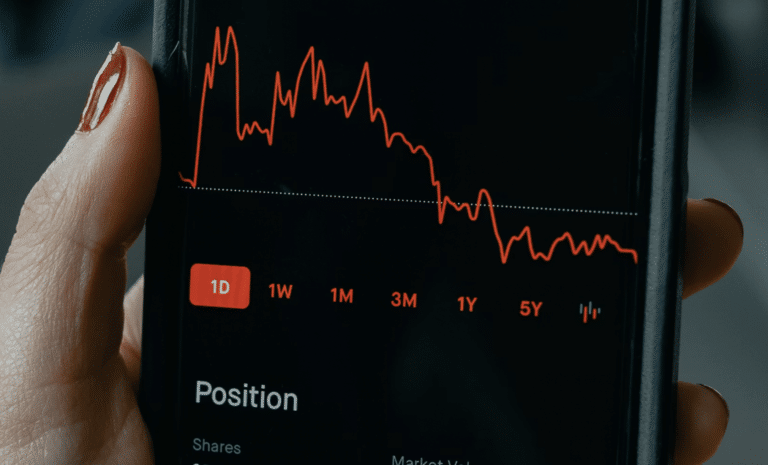

- PayPal reported its 4Q25 results this week, on 2/3/26.
- Earnings fell short of expectations.
- The board is replacing CEO Alex Chriss with Enrique Lores.
- Faster growth and more precise strategy execution are clear priorities, which can often come at the expense of existing merchants.
- Leadership explicitly stated that they plan to scale value-added services in 2026 (trying to get their current merchant base to pay more).
I’ve recently been talking about why merchants should pay close attention to earnings calls from their payment processors, as these can be very telling about what to expect in the near future.
It’s always a bad sign for businesses when their processor’s earnings fall short of expectations, and that’s exactly what just happened with PayPal. 4Q25 was so disappointed that PayPal’s board of directors decided to fire their CEO after just 16 months on the job.
Missed earnings mean investors put pressure on leadership to make up ground quickly, and the fastest way for that to happen is by finding ways to squeeze more profits from their existing customers.
So if you’re using PayPal or Braintree (owned by PayPal) to process payments, this directly impacts you and your bottom line. Read on for my full take on what to expect, along with a summary of key highlights from the earnings call.
Their New Strategy Could Signal Rate Increases for Businesses Using PayPal for Payment Processing
It’s always an easy assumption to make that when earnings fall short, rates can rise for merchants. This is a low-hanging fruit for payment processors because it’s easier to earn more from existing customers than acquiring new ones.
But beyond that generalization, I think that PayPal’s latest earnings call was even more telling for several reasons. Here’s why.
The biggest disappointment came from PayPal’s branded checkout solution, which increased by 1% (vs. 5% in the previous quarter). And was one of the main reasons why total revenue slumped (up 3% in 4Q25 vs. 5% in 3Q25).
To address this, interim CEO Jamie Miller explicitly stated on the earnings call that “execution is not what it needs to be.” He went on to say that:
- “Focus” and “investment” are PayPal’s two primary themes for 2026.
- Rather than trying to optimize for every merchant, they want to prioritize the group of merchants that make up 25% of branded checkout volume.
- PayPal plans to deploy new experiences and biometrics at the same time.
- A brand new PayPal app is launching in 2026, and they want to modernize the PayPal experience.
Whenever a company the size of PayPal talks about ramping up investment as a priority for the coming year’s strategy, they are basically saying that they’re going to spend a lot of money.
It’s definitely going to take money to launch a new app, create new checkout experiences, modernize PayPal, and ramp up biometric-based checkouts.
Where is this money going to come from? While they obviously plan to acquire new accounts, it’s clear that they plan to “focus” on the top quarter of customers driving the most revenue.
Exactly how they’re planning to focus on them isn’t totally clear, but I imagine they’ll be looking for ways to charge more.
Merchants Using Braintree Can Expect Upsells on Value-Added Services
Braintree actually performed well. PSP volume was up 8% (vs. 6% in the previous quarter), and Enterprise Payment volume grew by 12%.
Even though Braintree is owned by PayPal, I’ve always viewed them as a separate processor because the product is so different for merchants. Some of the lowest per-transaction rates I’ve ever seen have been offered to high-volume Braintree accounts, and the technology is among the best in the industry.
Here’s a quick summary of what leadership had to say about Braintree during the latest earnings call:
- There are currently 16 value-added services (VAS) available.
- Previously, VAS products were not being charged consistently.
- That’s changing, and merchants are “happy to pay” because the services are supposed to improve authorizations and reduce costs.
- They plan to scale value-added service adoption for Enterprise Payments (Braintree) throughout 2026.
This is very straightforward and doesn’t require much reading between the lines.
Part of the old strategy clearly involved offering some extra services without charging for them (which won’t be the case anymore). And they plan to push even more enterprise accounts into paying for additional services.
Again, I really like Braintree and I always have.
I hope that this isn’t a sign that PayPal plans to use it as a profit center by attempting to sell services to businesses that they don’t actually need. So if you’re using Braintree right now, just tread cautiously about any upsells you might be getting in the near future.
Don’t commit without evaluating your costs and ensuring you actually need it.
The Decision to Fire Chriss Was Surprising, and Highlights the Pressure for Immediate Results
Alex Chriss was ousted as CEO prior to the earnings call due to poor performance in Q4. Enrique Lores will take over effective March 1, 2026, and CFO/COO Jamie Miller is currently serving as interim CEO.
On the outside looking in, it’s difficult to tell if Alex Chriss was just a scapegoat or he legitimately needed to be replaced. I found some of the statements in the earnings call to actually be conflicting.
Yes, earnings fell short. Revenue missed by 1.27% and EPS missed by 4.54%, causing PayPal’s stock price to drop nearly 23% this week.
Obviously not good.
It’s clear that the board was unhappy with how Chriss executed their strategy. So much so, that they doubled down on the notion that they have the right playbook but it’s not being executed properly. Things were moving too slow, they wanted more discipline, and strategy implementation needed to be executed much faster.
Fair enough.
However, while leadership can obviously be blamed for everything mentioned above, I found it very interesting that Jamie Miller went on to name a laundry list of other reasons why they fell short, including:
- Being too optimistic about the adoption of their new checkout for both merchants AND customers.
- Weakness in US retail across their entire merchant portfolio (especially for merchants with low and middle-income customers).
- International macro issues (Germany was specifically named).
- Slow growth in travel, ticketing, crypto, and gaming.
- Their largest merchants all have different priorities and each need more white glove support than they initially realized.
Miller literally said, “challenges in the macro environment are real.” But yet they decided to fire Chriss because of poor execution.
To me, this says that Lores will be under immediate pressure to deliver results as soon as he steps in. Regardless of factors that would normally be considered out of their hands, PayPal needs to grow at all costs.
Which can be a very bad sign for merchants.
What Can Merchants Do To Prepare?
For businesses, this can feel like a lot to take in. Since earnings results are for investors and not merchants, there’s not always a clear path of what this means for you.
Here’s what you need to do.
- Understand that this is all speculation based on a combination of the earnings results and what was actually said on the call.
- There has been no official rate increase just yet (at least not publicly or notices sent to our clients).
- But we’ve seen this play out before from other processors, so a rate increase is a real possibility at some point for you this year.
- Audit your statements now to identify any overcharges or services you don’t need.
- Contact PayPal or Braintree ASAP to proactively negotiate better terms (if they give you a new deal now, it may prevent a rate increase on your account in 2026).
- Don’t just blindly accept any new service pitched your way, especially if you’re using Braintree.
- You probably don’t need the latest and greatest value-added service that they’re going to use as a profit center, even if the pitch is heavily focused on how the service can save you money (that’s not always the case).
If you need help with any of this stuff or just want an expert to review your statements ahead of a potential rate hike, contact me or my team here at MCC for a free consultation.
Other Noteworthy Highlights
PayPal has ambitious goals for Agentic Commerce: Agentic commerce is the new hot buzzword in the intersection between payments and AI. PayPal acknowledged that this isn’t going to move the needle in 2026 as AI-powered shopping adoption isn’t quite there yet, they said they want to “become the default payment option.”
Venmo is performing well: Venmo revenue was up 20% in 4Q25. There are over 100 million accounts, with 67 million active accounts. Pay With Venmo growth is up a ton (32%) but still short of the previous quarter (40%).
Fixing branded checkout is a top priority: A huge portion of the earnings presentation focused on getting more from branded checkout. They are taking a three-phase approach that includes “Experience, Presentment, and Selection.”
BNPL is up with more room for growth: BNPL volume was up 23% (vs. 20% previous qtr). Volume surpassed $40 billion in 2025. As part of the “Selection” priority mentioned for branded checkout, they are saying they can also expand BNPL.
Expectations are muted: Looking at PayPal’s updated guidance, they are predicting mid-single digit declines for 1Q26. And they’ve pulled previous guidance from 2025 investor day, and will be reporting quarterly moving forward.