 by Matt Rej
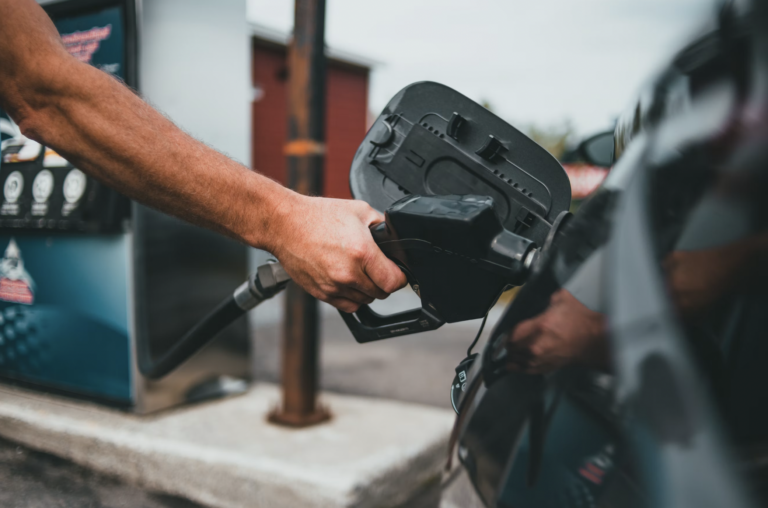

Toast just launched Toast Fuel (also known as Fuel Mode), an add-on to its retail POS.
This new system is designed to run gas pumps, convenience store purchases, and food counter sales on a single platform. And if you operate an independent gas station, there’s a good chance a Toast rep either contacted you already or will be contacting you soon.
I’ll give Toast credit for this because the system sounds great and it honestly may be more convenient than whatever you’re running right now.
But I don’t see a scenario where Toast Fuel saves you any money.
And in an industry where margins are already razor-thin, you probably shouldn’t be sacrificing cost for convenience.
Toast Fuel Requires You to Switch Processors
You can’t use Toast Fuel and keep your current payment processor.
Every Toast POS solution has to run cards through Toast Payments, which includes every transaction at the pump, inside your store, and on fleet cards.
So the decision here is much bigger than just switching to a new POS. You’d have to move your entire card volume to a new processor.
This could result in early termination penalties from your current provider, plus additional costs associated with the new equipment and setup.
But even if you’re able to move away from your current processor cleanly, turning on Fuel Mode inside of your Toast POS can present a long-term problem that’s largely overlooked at this stage: tying your processing to your equipment.
Once Toast runs your pumps, register, and kitchen screens with Toast Payments underneath everything, leaving them down the road would require you to rip everything out.
Toast knows this, and it changes how competitive they need to be when your contract renews. So even if they’re able to offer you a semi-competitive offer right now, it won’t last forever. And we’ve seen this strategy play out first-hand specifically with Toast in the restaurant space, so I imagine they’ll be using the same playbook for c-stores and fuel merchants.
Toast Fuel Pricing
Pricing for Fuel Mode transactions hasn’t been publicly disclosed, and it’s likely going to be a custom rate for each merchant largely based on volume.
Other businesses using Toast mostly pay a bundled flat rate. But I’d be shocked if that’s what Toast offers at the pump.
Card networks already have fuel-specific interchange categories and stations currently on an IC+ setup with another provider are already paying those wholesale rates plus a transparent markup. Toast knows this, and a flat-rate pricing model on fuel wouldn’t come close to a competitive offer.
What’s most likely is that you’re going to be offered a custom quote based on your volume. Toast may even charge one rate for fuel transactions and another for food/convenience purchases.
Just look at the offer very carefully and don’t be swayed by a single effective rate.
You need to fully understand exactly how each transaction will be charged. Even if the fuel price is competitive, everyone knows that the real profit margins at a c-store come from inside. So you don’t want processing costs to eat away at your most profitable sales.
Why Toast Fuel Can’t Be Cheaper Than Your Current Processing
Let’s take a step back for a minute and just use basic logic to compare your options.
Toast Fuel comes with a lot. To name a few:
- Kitchen display screens
- Self-checkout kiosks
- Online ordering
- Loyalty and marketing tools
- AI assistant
- Onsite installation
- 24/7 support
None of that is free to build or run. Which means Toast needs to charge accordingly between its software pricing and payment processing rates to ensure they’re actually making money on your account.
That’s why I just can’t see a world where Toast Fuel comes in cheaper than what you’re paying today.
If your current setup is mostly just processing, your provider can offer you a competitive rate for that simplicity.
Whereas Toast has to cover its software platform, hardware business, installation partner costs, and so much more. And your card volume is the biggest revenue stream they’ll get from you.
So I doubt they could even match a well-negotiated rate on your current setup. Let alone beat it.
Gas Station Margins Don’t Leave Room For Higher Processing Fees
You probably know this a lot better than I do, but the numbers are still worth seeing in one place.
The National Association of Convenience Stores (NACS) estimates that gross fuel margins are roughly $0.38 per gallon. Gross, before operating costs.
Average costs to sell that fuel are around $0.25 per gallon, with card fees alone representing $0.084 of that expense.
And 82% of all convenience store card sales are now paid by card.
Assuming you’re near these averages, you’re netting somewhere in the neighborhood of $0.10 per gallon.
Industry-wide, c-stores paid a record $21.3 billion in card fees last year. The NACS also says that for many of these retailers, the card fees have exceeded pre-tax profits, which makes them the second-biggest operating cost after labor. And those fees are up over 80% over a five-year stretch.
These numbers all tell the same story.
Fuel margins are already tight, and processing costs are continuing to rise.
Switching your setup to anything that could increase your processing expenses is a move in the wrong direction.
Toast Fuel Limitations
It’s also worth noting that the current version of Toast Fuel is fairly limited right now.
Toast says this is built specifically for unbranded, independent stations. So if you have a nationally recognized logo on your pumps (Shell, ExxonMobil, Chevron, etc.), this probably isn’t for you.
This makes sense, as branded stations would likely have to get approval through the franchise. And I think Toast would have a tough sell there (for all of the reasons discussed so far).
And at the time of its launch, Fuel Mode is only supported through Allied Electronics NeXGen PRIME forecourt controller, and EMV at the pump is for Wayne dispensers.
Though Toast says PIN debit at the pump and Gilbarco dispenser support is in the works.
So if your current equipment isn’t fit, you’d be looking at even more changes on top of everything else. Which makes the math even harder to justify.
If a Toast Rep is Pitching You
Treat Toast Fuel like any other sales pitch. The rep’s job is to get you to switch. And whatever demo or presentation they show is designed to highlight the best features: clean dashboard, pump control, and AI reporting.
But the part that matters most is the processing agreement, which rarely gets the same attention it deserves.
So before you can entertain a pitch, you need to be asking for:
- Exact markup on fuel transactions (at the pump and inside)
- How fleet card transactions are priced
- If fleet/fuel interchange savings programs are available
- Exact markup on convenience and food transactions
- All software, POS, and add-on fees
- Whether your rates can change during the contract
If the rep can’t answer all of these questions in writing, then you have your answer. And if they can, you’ll need to run an independent analysis to see if the entire proposal actually beats what you’re currently paying (not based on the Toast’s projected savings for you).
But for most gas station owners, Toast Fuel shouldn’t be on the table at all.
Negotiate With Your Current Processor Instead
If the Toast Fuel release got you thinking about what you’re paying to accept cards, that’s definitely something worth following up on.
But you don’t need to switch your setup to save money.
Card fees on fuel and convenience transactions have been increasing for years, which is a widely established fact. This is largely due to:
- Markups creeping up at renewal
- Fuel transactions not being priced the way they should
- New fees showing up on statements without much explanation
- Paying for additional services you don’t actually need
All of that can be fixed without touching your pumps or POS.
Here at MCC, we audit your statements for free and negotiate better rates directly with your current processor. No switching, and no new equipment.
Get a risk-free consultation today. There’s no fee if we don’t save you money.