 by Matt Rej
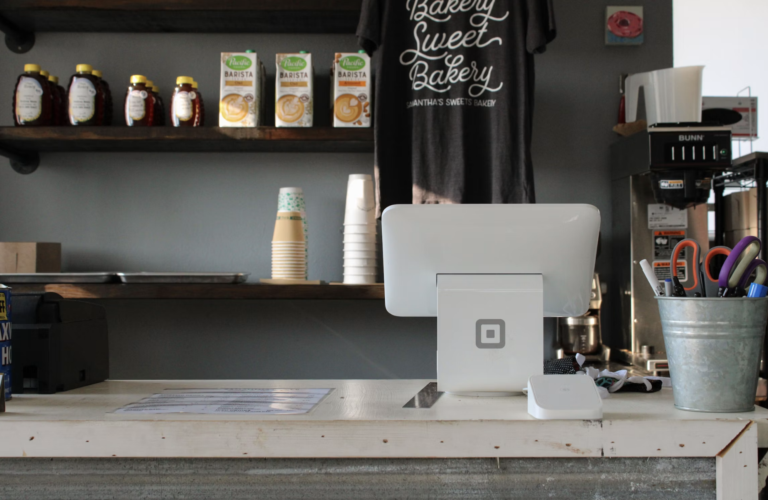

Block disclosed something on its 2Q26 earnings call that would have seemed like a typo ten years ago.
Square now works with over 200 active independent sales organizations (ISOs), and the number of merchants arriving through that channel grew triple digits over the prior quarter.
This may not seem like a big deal, as there are thousands of ISOs in processing, all working with a range of different acquirers. But Square using this model and growing so rapidly with it should be a real eye-opener for merchants.
It’s a sign that the payments industry has officially changed. And everyone is trying to maximize revenue on your merchant account.
The Convergence of Merchant Acquirers and PayFacs
For decades, there were two fairly distinct ends of the spectrum when it came to payment processing.
On one side sat the acquirers: Fiserv, Global Payments, Worldpay, Elavon, and other players who owned the backend processing infrastructure. They scaled through enormous networks of ISOs, agents, and banks. Payments was the core product, and everything else was a third-party vendor’s product that was integrated through a gateway.
The other side was software platforms that operated as payment facilitators (PayFacs). I’m referring to the likes of Square, Toast, and Shopify. Running as a PayFac lets them onboard merchants under their own master account in minutes rather than days. Payment processing helped fund the business, but the primary product was software: POS, ordering, inventory, lending, etc.
Merchants picked a lane based on what they valued and which marketing spoke to them.
They could work with an acquirer to have more control over cost. Or pay a premium to a PayFac for the convenient setup and added tooling that came with it.
But now both of these lanes are merging into one, and it isn’t happening by accident.
As Processing Margins Got Squeezed, Processors Moved Into Software
Think about how the economics work here. There’s only so much money that an acquirer can make by marking up your discount rate and increasing it every other year.
Interchange and assessments are fixed, meaning every provider pays the networks the exact same published rates. So acquirers need to be somewhat competitive on pricing to get your account in the first place. But even doubling basis-point markups on every account isn’t enough to appease the investors of these publicly traded companies.
So they started building their own software. Something that was historically done by third-party vendors or handled via integration.
Margins are high from day one on software because there’s nothing sitting underneath it.
Fiserv’s growth story completely reflects this shift. Their core processing model margins are struggling. While its best-performing product is Clover, and more specifically, what gets attached to Clover. Value-added services now make up roughly a quarter of Clover’s revenue and it’s growing faster than payment volume.
It’s a mix of software subscriptions, marketing tools, and even cash advances via Clover Capital.
They take a merchant already on Fiserv’s legacy processing, sell them a package of Clover services, and that account is now worth meaningfully more per month. None of this requires them to process an extra dollar of volume.
Global Payments is doing this, too. They consolidated more than a dozen products into a single platform called Genius, and they’ve spent the last year pushing it through its base of merchants. As a result, Genius has a 75% YoY increase in new customer yield as proof merchants will pay for it.
Yield = revenue per merchant.
While PayFacs Leveraged ISOs and Sales Teams
On the flip side, PayFacs also started moving toward the middle. Which brings us back to Square’s 200+ ISOs.
An ISO is just a sales channel that costs the platform nothing until it produces results. It’s the ISO’s job to recruit the merchants, handle the pitch, and then get paid out on the account’s revenue afterward.
This is one of the foundational models that built the merchant acquiring industry. And Square actually avoided it for years because the whole point of its existence was that a merchant could sign up online alone at midnight without having to talk to anyone.
Now the PayFacs who were largely software-first businesses are using the ISO model. They can reach more merchants by putting boots on the ground in the form of other people handling sales on their behalf, for commission.
Toast has been pouring money into direct field sales for the same logic. The only difference here is that those sales reps are in-house.
But across the board in this category, software platforms that also process payments are now doing whatever they can to recruit resellers, referral partners, and anyone else who can help them grow.
Both Sides Ended Up Selling the Same Account
Put each of these together, and the pattern is hard to miss:
- Traditional processors are building better software than ever before.
- Software-first companies are adapting the sales infrastructure that they were founded to replace.
Both sides are now chasing the same middle ground from opposite ends.
It’s rough to say exactly what triggered this (chicken vs. egg debate). I personally think it just happened naturally as both sides recognized more opportunities for growth. I don’t know that Global Payments was worried that the Squares and Shopifys of the world were going to steal their customers. They were just looking for ways to extract more revenue per account, and the same types of software sold by PayFacs became the natural course of action.
Acquirers are even running their new distribution play through existing channels. Meaning they don’t just leverage ISOs for payments anymore.
Worldpay’s 30 largest bank partners are about to start selling Genius. Which means a restaurant owner is about to hear a POS pitch from the bank holding their line of credit.
And Integrated Payments Turned Software Vendors Into PayFacs
There’s a third movement here that’s worth diving into as well.
Vertical-specific software companies never used to touch payments. Things like hotel PMS software, veterinary practice management systems, field service operations, self-service storage tools, etc.
These vendors built software, supported a list of processing integrations, and let the merchant bring in an existing merchant account if it was on that list. End of story.
Those days are over. Now those same vendors run their own branded payments products.
- Tyler Technologies offers TylerPay to municipalities and school districts.
- Pest control businesses using PestPac are pushed into WorkWave Payments.
- Vets using PetExec have been strong-armed into using Gingr Payments to avoid a 1% gateway fee.
There are hundreds of other examples of this out there, across practically any industry with niche software.
When you look behind the curtain, this isn’t a better solution.
For example, SingleOps (tree care software) runs on ProPay, which is a Global Payments subsidiary. Storage Commander offers SC Pay to self-storage businesses, but it’s owned and powered by Fullsteam, which is a PayFac that leverages Fiserv’s acquiring on the backend. A vet clinic using Vetspire Pay may think it left traditional processing behind. But Vetspire Pay is powered by CardConnect, another super ISO of Fiserv.
The acquirer never lost the merchant here. It just moved underneath the software and started operating under another brand. And the merchant now has two additional companies taking a cut along the way.
Now Processing Costs Rise Without a Rate Increase
These changes have directly impacted costs for merchants.
Now providers in all categories can increase your effective rate without touching your base rates.
Square has been charging 2.6% as the base rate for in-person transactions for the last seven years. Yet they can still earn more margin on your account because of all the other fees associated with processing, plus the POS and software costs.
Traditional processors are doing the same. Your discount rate from Global, Worldpay, or Elavon might still be 0.20% + $0.10. But now you’re paying a range of VAS and software add-ons that increase your costs without touching your rate.
Statements also get harder to read as these additional charges get added.
Your processing fees and software costs are now arriving on the same invoice from one company, which makes it even more challenging to separate what it costs you to accept a card from everything else.
It’s even more obscured with branded payment products. When the pest control software, dental practice management software, or field service software offers processing, the pitch is convenient. But the result is another layer of markup sitting on top of the same acquiring relationship you could have held directly.
Nobody Audits Software the Way They Scrutinize Rates
Merchants have definitely gotten better over the years at understanding payment processing. Many now know what an effective rate is and how to negotiate discount rates with their provider.
And when they look at a statement, they’re largely assessing the headline rate: what the processor charges them per transaction.
But there’s no equivalent for anything else on the account. I talk to merchants every single day about credit card processing. Even the ones who can tell me their effective rate within a few basis points have no idea what they’re paying for everything else attached to their account.
That knowledge gap is where the industry’s growth is coming from.
Final Thoughts
The lines defining categories of payment processors have become blurred. What used to be:
- Acquirers focused on processing
- PayFacs prioritizing software
- Third-party software vendors supporting integrated payments
Has turned into:
- Acquirers building software and pushing VAS harder than ever before
- PayFacs partnering with ISOs and expanding their sales teams
- Software providers ditching integrations and shifting to a white-label PayFac model
Every single one of these has the same goal: earn more money from the same merchants.
These providers can’t control your volume. So rather than hoping you’ll double your sales next year, they’re just going to sell you something else that results in them profiting more from your account.
This means that it’s never been more important to audit your processing costs. You might realize that a big chunk of what you’re paying has nothing to do with credit card acceptance at all.